
Can Treasury Buybacks Help Solve the Debt Problem?
September 8, 2026 · Steve Laska, Matt Gomoll · 30 min
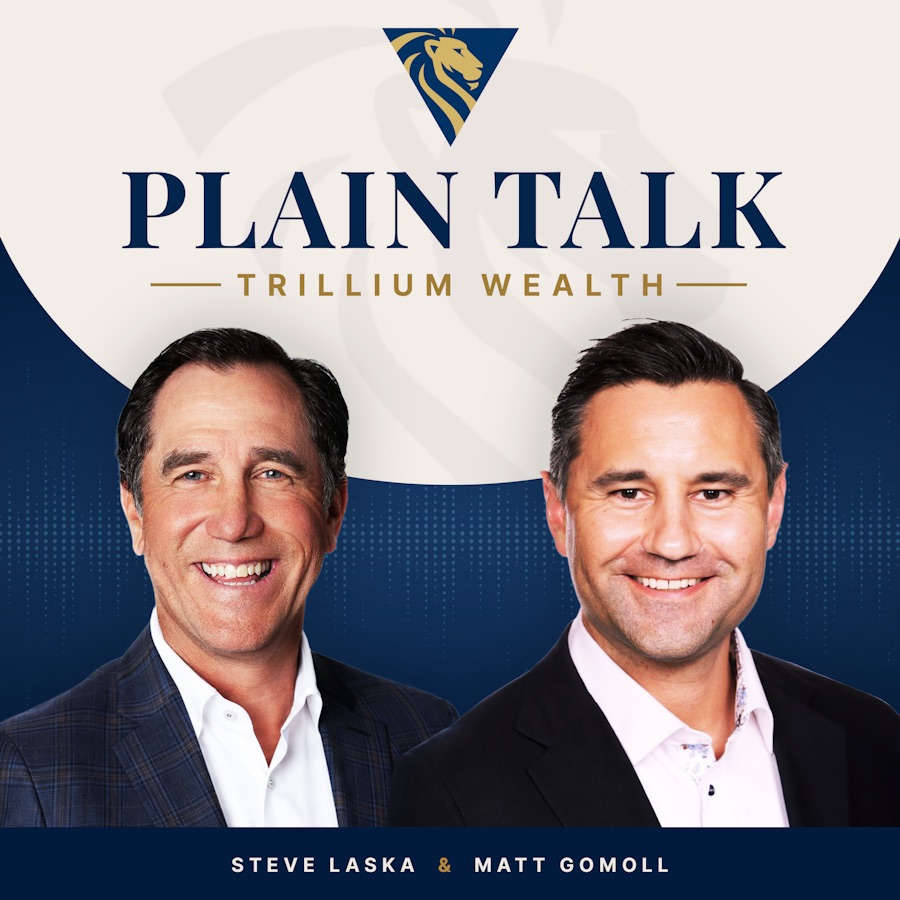
Can Treasury Buybacks Help Solve the Debt Problem?
September 8, 2026 · 30 min
Episode summary
In this September 2026 episode of Plain Talk, Steve Laska and Matt Gomoll ask whether Treasury buybacks can help with a national debt that has reached $40 trillion. Matt says there is nothing magic about the number, but there is no sign the deficit will slow, and higher rates make the interest bill expensive. He explains that Treasury Secretary Scott Bessent announced plans to double buybacks from 2 billion to up to 4 billion dollars, targeting older 10- to 30-year securities and replacing some with shorter-term debt. That can lower interest costs, but Matt stresses it does not reduce the debt, only changes its composition.
Matt says long-term yields reflect expected inflation, expected short-term rates and a term premium, and that heavy issuance of high-quality corporate debt, 1.36 trillion dollars of investment-grade bonds through July by his count, competes for bond investors. Higher yields raise the government's interest costs and feed into mortgage rates. He notes the 30-year yield fell the day the plan was announced, then reversed.
Both hosts frame buybacks as treating a symptom. Matt says the core problem is spending more than the government takes in, that 60 to 70% of federal spending goes to mandated programs such as Social Security, Medicare and Medicaid, and that no one knows the debt level at which bond investors would balk. He says growth or inflation can ease the burden, while Steve argues that, as with a household, it takes both earning more and spending less.
Key takeaways
- Matt Gomoll said Treasury planned to double its buybacks from 2 billion to up to 4 billion dollars, focusing on 10- to 30-year securities.
- Matt stressed that buying back long bonds and issuing shorter ones changes the mix of the debt without reducing the amount owed.
- Matt said heavy investment-grade corporate issuance, which he put at 1.36 trillion dollars through July, competes with Treasuries for bond investors.
- Matt said the 30-year yield fell the day the buyback plan was announced and then reversed, as bond investors pushed back on intervention.
- Steve Laska questioned why the government did not lock in more long-term borrowing when rates were historically low, and Matt noted some recent criticism of former Treasury Secretary Janet Yellen on that point.
- Matt said 60 to 70% of federal spending goes to mandated programs such as Social Security, Medicare and Medicaid, which are hard to change.
- Matt said no one knows at what debt level bond investors would refuse to keep lending, but the current path does not feel like a good one.
Questions this episode answers
Do Treasury buybacks reduce the national debt?
No, according to Matt Gomoll in this September 2026 episode. He said the Treasury plan buys back older long-term bonds and replaces them with shorter-term debt, which can reduce interest costs if short rates are lower but leaves the amount owed the same. He described it as refinancing and shifting the composition of the debt rather than erasing it.
Why are long-term Treasury yields rising?
Matt Gomoll said in September 2026 that long-term yields reflect expected inflation, expected short-term rates and a term premium for holding longer bonds. He said sticky inflation, strong growth that draws money to riskier assets, and heavy high-quality corporate bond issuance competing with Treasuries all push yields higher, which raises government interest costs and mortgage rates.
Who owns US government debt?
Matt Gomoll said in September 2026 that much US debt is held by the government itself and by domestic investors, with the rest held by foreign private investors and central banks. He said some foreign central banks have been selling Treasuries to buy gold, which helped push gold prices higher. Steve Laska said the common belief that China owns half of US debt is wrong.
How can the US get out of its debt problem?
Matt Gomoll said in September 2026 that the root cause is spending more than the government takes in, and that until that changes, steps like buybacks only treat symptoms. He said growing the economy can raise tax receipts and that inflation can erode the real value of debt. Steve Laska argued that, as for a household, it likely takes a combination of earning more and spending less.
Plain Talk reflects the views of the speakers as of the recording date and is provided for informational purposes only. It is not a recommendation to buy or sell any security or a guarantee of future results. Market conditions change; talk with your advisor before acting on anything discussed.
Full transcriptRead the full conversation
Automatically transcribed from the episode audio; may contain minor errors. Select a timestamp to play from that point.
Welcome to Plain Talk with Trillium Wealth. My name is Steve Laska and I'm the managing partner here at Trillium. As usual, I'm here with my partner and chief investment officer, Matt Gomoll. Matt, today we're getting back to kind of talking about what's going on real world right now. Even the topic we want to talk about, I don't know how much I'll be able to stay on topic because there's a lot of pieces to it. Let's talk about the $40 trillion debt. And for a lot of people, they'll give all the different machinations and numbers of percentage of this, percentage of that. But even the biggest naysayers on debt is not a problem or starting to say, oh my, this is a problem. This is growing at a ridiculous rate. Yeah, there's nothing magic about $40 trillion versus $39 trillion or $38 trillion. It's just very clear.
You know, we hit these milestones and there's no action of there's no indication that the deficit's going to slow down and we're not going to keep piling on top. And then it gets to the more debt you have with rates being where they're at, it costs a lot of money to pay for it. Right? The interest expense is just really a lot after you get to $40 trillion and it keeps going up. So it's kind of all those things put together of we don't see this going anywhere. The government doesn't seem capable of responding and trying to reel in first the deficit, right? So stop adding to it and then reducing the debt, which would be actually like paying it down and shrinking it. So that's kind of where we're at and why there's some consternation in the bond market. That just quickly, do you know what year we crossed $1 trillion in debt as we sit around $40, like when we crossed a trillion, it's 1981.
That's not that long ago. Like we had zero debt like in 1980. In 1981, we crossed a trillion. So 200 and however many years to cross a trillion in debt and 45 to go to $40 trillion in debt, that's why it's starting to become a problem. It's like there's no, it's never going backwards now. And when you see numbers and people get very political on what president's adding the most, whatever the next one is going to add the most because we're just spending our way in there. So when they do try to make some adjustments to the debt, and I think in this case, the treasury buybacks were probably more along the lines of, hey, like that at some level can reduce interest payments and things like that. But it didn't really do very much talk about the treasury buyback and what the intention was and where it kind of stands now.
Yeah, so the treasury buyback by itself isn't like a surprising thing. It can occasionally do this and essentially what they were doing and what the change that they made that you'll hear about recently was treasury secretary Bessent announced that in September, they're going to double their buybacks from 2 billion to up to 4 billion and they're targeting kind of older security. So things that are in the 10 to 30 year range for government treasuries. And their justification was some of these are less traded and they thought that the prices of those treasuries didn't really match what they thought were fundamentals. So they said, okay, well, we're going to buy maybe a 20 year bond and replace it with a short term bond, right? We might replace it with a one or a three year treasury instead.
And so it's not like erasing the debt. It's just kind of refinancing and shifting. I took a 20 and I replaced it with a two. But the longer term debt is more costly to the federal government. And so the idea would be like, well, I'm going to retire some long term debt by buying it and I'm going to issue some shorter term debt that might be a little less expensive on an interest rate. And so I might reduce the interest rate payments that the government has to make. But in a lot of those cases, like we're reducing it by buying that back ourselves, right? So then we still owe the debt service on it. Like what's like the treasury has a lot of bonds on their own balance sheet. Like I think you've talked about before, like who loans are debt? Everybody out there thinks like China owns 50% of America's debt. It's like it's it's so small what these other country zone who owns most of this debt today. And why is that? Why is it a problem out on the long term? Yeah, so like a lot of debt is is just government obligations. And so we own our own debt.
US domestic investors own our own debt. Foreign investors, you know, private individuals can own our debt. And then central banks. And part of part of the transition that we saw over the last couple years, this coincided with the rise in gold was this swap for foreign central bank selling treasuries. They used to hold treasuries on their balance sheet as a, you know, a risk-free asset. And they said, we want less of those and we're going to buy gold, right? So I'm going to sell, you know, a billion dollars of US, you know, 10, 20, 30 year treasuries. And I'm going to use that cash to buy gold that sent the gold price higher. So it's a combination of all these things. And then you get into, you know, what this is not is the federal reserve buying treasuries, right? The federal reserve could print money and just buy treasuries whenever they feel like. That's not what this is at this stage. This is just the treasury department saying, I'm going to buy back this 20 year and I'm going to issue a two year and I still we still have the same amount of debt. We've just changed the composition of it. Right. And so when these when rates get like this in the situation we're in today, so first of all, I don't want to be a sky's falling guy like the risk-free rate is tied to the 10 year. And the reason why the US treasuries are the literally called the risk-free rate is no matter what people talk about to fault and all those things, we can just print more money and buy more if we had to at some level. Right. And so we're very, very investable. However, when rates start to get to a certain level, a corporation could come out and go, they don't, they're not tied to treasuries. They can say, we're going to issue debt. Do you want to buy our debt and they name their price? Right. So you start to compete. And I think we're starting to see that, right? Where people are even psychologically going, whether it's true or not, I think Meta is more likely to pay me back than the US and or if Meta is going to give me just a point, point and a half higher than a treasury, I'm still going to take it because I don't think they're going anywhere. So you have these big companies in that right now and true or not true that we're starting to compete for dollars with big corporations for big money out there. Where they're going to put it. Yeah. So there's a couple things going on here I want to cover. One, what you just said is there is more corporate debt and frankly high quality corporate debt, right? You can, you can go down a rabbit hole of obligations that are meant for data centers, can they pay them back and all those things. But right now, Google issuing debt is a really high quality company that is highly rated investment grade corporate debt. There is through July, I think 1.36 trillion of investment grade issuance of bonds, which was 27% above the prior year. So that just means we have more corporate, really good corporate debt coming into the market because they're choosing to finance some of this, this spending through debt. And that is competing, right? If you're a bond investor, you were looking at the whole landscape of available bonds to you and you've got a whole lot of government treasuries and now you have even more corporates and you're saying, well, if I'm going to settle for the government debt, I want a little bit higher yield because these guys over here are going to pay me even more, right? So it's that balancing act that it's not a direct competition, but it is like influencing it. Some of the other things going on here is, long term yields are a combination of what do I expect inflation to be? What do I expect short term rates to be? And then add a term premium, right? I should get paid more for holding a 30 year bond than I do for a 10 year bond than I do for a two year bond, right? So you add all those things up. If inflation stickier, it makes future bond payments less valuable because we're inflating away the value of those dollars. So I should get a little bit more yield as a bond investor. Also, if I have strong GDP, if my GDP is growing, it also like where that capital is flowing, it might be going into more risk assets or more corporate bonds and reduce the treasury is seen as a safe haven, right? So in times of economic stress, the treasury should perform well because people are saying, I just want to go to the safe asset and that's a treasury.
Well, in times of expansion, people are saying, gosh, I don't want to sit in treasuries. I think the the economy is growing and I should put my money to work in the sectors of the economy that are growing it. And so you have less demand in that naturally in the treasury market than you do in other parts, whether it's the stock market or corporate bonds. And those things all kind of work together to make push that yield higher. And the problem is it has negative effects. Number one, just the government has to pay more interest, right? Like if government but treasury yields are high, that's a lot of more money that the government has to spend on interest payments. But it also influences the personal borrowing rate, right? If you're a mortgage borrower, the 10 year matters a whole lot, if that 10 year keeps floating higher, your mortgage might cost more. And so it's all these things together that the treasury department sees and is this was kind of an initial salvo to say, hey, we might intervene a little bit because we don't like we don't want 10 year bonds to go into the 5% range. That would that wouldn't be great. Yeah, so though, like what ended up being the reaction to all that? Like I think Secretary Bessent thought I got a big move to make here. And I think what a lot of the corporate guys like coming out of corporate America are learning is that and they should know it, you know, some of the institutional buyers out there, they may or may not take that signal as a good thing. And this seemed like they took it as a nothing. Like I was shocked that, you know, he makes a move and it had an effect for literally like less than a day.
Mm hmm. Yeah, the 30 year yield fell the day the announcement was made. So, you know, yields are inverse to price. So that day, the price went back up, which meant there were more buyers than sellers and the yield went down. And then it kind of undid itself the next day. Since then it's kind of stabilized, right? The 30 year I think got as high as 5.31 about 10 days ago and it's come back down into I think yesterday was like 5.19. The 10 year was for as high as 4.72. And now it's kind of settled down to 4.6-ish. So it kind of reacted reversed, digested. It was this was kind of a, I would say an initial signal of we're willing to do this. The problem is bond investors don't necessarily like it. They want to say, hey, stop trying to intervene here. We're the ones telling you what we think these bonds are worth. Right? So by the government kind of coming in and trying to buy up a bunch and change the composition of the treasury market, it can have the impacts on the rates. And the bond investors are saying, hey, we're telling you what these things are worth and you're not listening. If they, you know, if bond investors drove up the rates even further, you might see politicians have to respond with like, oh, we actually got a cut spending. And it's like that if that's the direction bond investors want it to go, there can be a battle here where they keep trying to push yields up. Treasury tries to push them down and, you know, see who wins that fight.
I wonder what lessons we've learned and again, monetary policy has largely changed, changed largely with Alan Greenspan coming in and they paid a lot more attention to it and they feel like they have different controls to keep us out of like the stagflation of the 70s and all. But, you know, I was a guy proposing many years ago, like, why didn't we issue more debt when it was so cheap? It was like, I couldn't believe people were giving us money on 30 years, sub 2%. And I'm like, why are we not fixing the entire country's infrastructure? Why didn't we go into 35 trillion of debt 15 years ago instead of 10 years ago, whatever it was, well, whenever the interest rates were historically low in the twos, why didn't we do that then? What do you see in out there now? Is there a lot of revisionist history of people going darn it? I would have done that, but I wasn't in charge. Yeah, there. I have seen some criticism lately for Janet Yellen, who was under the Biden administration. So now we're thinking like the 21 22 time frame, really 21 was a historic low for those long treasury rates. And yeah, they couldn't, it's it doesn't work like refinancing your house where you're just like, oh, the new rate is two and a half. I'm just going to lock in my whole mortgage at two and a half. You can't do that with the treasury market. You know, you couldn't just in 2021 refinance all 30 trillion or so whatever the number was back then at two and a half percent. But you certainly could do some. They did do some issuance, but the criticism is you should have done way more. There was a once upon a time floating 50 year bonds when things were actually pretty low. It's like if the if their market can absorb it, locking in a really low rate is a useful thing. And now this is the opposite, right? This is taking a long rate, a long dated bond and refinancing it to a short dated bond, which is going to become now we have issued two years from now. What do we do? Do we just keep running the government on short dated bonds?
And that might be the answer is right. Like if we're paying less interest on the short end, they might just keep doing that over and over again because it's unappetizing to issue 20 and 30 year bonds that you're going to have to pay a lot more interest on. So this isn't your pain just to the existing administration. Like I said, this this problem has been building for a long time. You know, you're somebody who believes that we're treating the symptom rather than the problem. And it seems like economically right now and again, I think it's been happening for a while, we're playing a little bit of whack-a-mole, right? Like we're like, here's a fundamental problem. And I will say where this administration, I think, is falling short now is there is a knee jerk reaction to everything. Like I looked at the math man, like the the beef that's coming in here at a discount, it's 670 million pounds of or not million, it might be billion. It's huge number of beef that's coming into the country.
We're going to get in a tariff war with our closest neighbor in LA. We're going to be an on-the-ground war. We're going to buy back treasuries. Like there doesn't seem to be a plan in place to get any of this done. And everything I just said contributes to the deficit right now. Everything I just mentioned, whether it's tariffs and whether you think you're collecting that money and what it does on the other side economically, it's contributing constantly. What is your view on symptoms versus problem? And what are we not addressing? What are we addressing instead? It truly comes down to the the treasury can take actions and they might make temporary adjustments and fixes, but ultimately the bond market is massive. And unless the fiscal discipline is there and inflation control is there, it's not changing things all that much. Right? And so, you know, we're in this problem because we spent more than we brought in in taxes. I mean, it's that simple, right? That's why you have a deficit is that expenses outpaced, you know, treasury revenue. And until that changes, this is a maintaining problem. And, you know, this is this is also a political problem, right? So you can see these these let me let me give you some Advil for that symptom because you know, you got a headache, but I'm not treating the real problem.
We're trying to it seems like there's some symptom treatment going on ahead of the midterm elections. You know, the the beef thing is trying to reduce beef costs, you know, which feeds into inflation is all these things. And it's trying to make voters a little bit happier. But ultimately, if we're stuck with higher inflation and we're stuck with unchecked government spending and low taxes, right? That's part of it is that we are in a very low historical tax range. All these things add up to just more deficits. And until we're serious about that, we're going to keep running deficits. Now, I will say like we're in uncharted territory. There is not a set limit on how much we can borrow, right? Nobody knows if if the market will balk at 41 trillion or 50 trillion or 80 trillion. We don't know where that that limit is to where bond investors finally say no way like you are you're you know, that that currency and that debt is failing and I want nothing to do with it as what happened in smaller countries where they have way too much debt issuance. So we don't know where that ranges. But we just can feel this isn't a great path to be on.
Yeah, I'm glad you touched on the political thing. A few years back was in a like fairly intimate room. It wasn't too small, but there was a limited number of people there. And Scaramucci was talking about the fact that like the Chinese one advantage they have is they don't really have to worry about elections. And so when they talk about something and they identify a problem, and I'm not I don't want to be China necessarily, but they get to take it. They take an approach of 25 years as a short period of time. When they're making a plan, they see that as a near term problem. And we are on a two year election cycle, because all of Congress gets flipped every two years. And they literally the second they get to Washington, they're already raising funds and running for the next election. Now, I think that's the mindset of politicians in the United States. But we all know there's there's however many seats in Congress, ballpark 435 seats in Congress, there's only like 30 or 40 of them that are ever really up for grabs, meaning a Republican's going to win in one place and a Democrat's going to win in the other. If people might be afraid to be in primary, but it is in fact a it is in fact a little bit of a false narrative, but one that they play into. So that is by the way, why you see these things. There's no doubt that like I can look at the beef thing, right? When we do that, and that's going to be damaging to existing farmers here, it's going to be chaotic on things like price. There was already a strong demand for beef, by the way, there wasn't people complaining about prices, but it wasn't necessarily lowering demand. Government intervention in those are not necessarily to do anything other than win the next election. Like if I can drop those prices by November, if I can get gas prices going down by November, people will say it's trending right, and they'll just validate their vote. So that's a significant problem for us here right now is the political overlay. And there was a time, by the way, that original deficit was actually created by one of the great conservative presidents of all time in Ronald Reagan. He literally talked about deficit spending, right? We're going to spend our way out of this. And the economy was awful in the late 70s and early 80s. And then it just took a life of its own on. And I'll actually read things where people will say, well, a president doesn't really affect spending. I'm watching them all do stuff where it's pet projects are throwing at this. And you know, there's not really a budget like, oh, I like that country. So I'm going to give them some money or I like those folks. I'm going to subsidize that. So they do have an effect. But by and large, it's a political quagmire that I don't see us getting out of anytime soon. But I hope it doesn't hit 80 or 100 billion anytime soon. Matt, what are your closing thoughts on debt?
Yeah, I think part of the political mood here is, as taxpayers, we're sitting here 40 trillion in debt and saying, what did we get for it? Like, do we do we have free healthcare? Do we have a robust industrial economy? Do we have like, we have these future ideas of what in politicians say all the time of what we want the country to look like? Matt, do we have new airports? Do we have airports? Do we have roads? We have bridges? I mean, I just try flying out of airports. They all suck. We bought a bunch of money. Our infrastructure is not good. And we're paying more for everything. Yeah, and you contrast that, you know, with China's the way China subsidizes and launches industries, the battery industry, the electric vehicle industry, they used state money to do that and created an ecosystem that's now a manufacturing powerhouse. And now we're competing and we're struggling. And, you know, most most government spending 60 to 70%, depending on how you calculate it, is just entitlements. But that it is just, there's congressionally mandated programs, Social Security, Medicare, Medicaid, all these things that if you qualify for them, you get the money. And that is, so we're spending it on, and I would say, we're spending on the welfare of our population. And that's why we're, you know, none of those, those are really, really hard to adjust and tackle and say, how do we, how do we fix these a little bit? And that's where the real money is and the real spending is. And it's just like, yeah, we, I guess taxpayers want more for their money. And that's why there's such consternation with any politicians, because it's like, you want to, you want to talk to me less, you want to talk to me more. I don't know that either of you are going to do anything serious about it. And we're just going to keep running up a tab.
So every time somebody wants things to look like the business world, I would give an example, like in the business world, if you overlay that on, on our country and want it efficiencies, states would be merging, like all of New England would merge into one state, the North, the Dakotas, Idaho, Wyoming, they're like, they all have a very similar political view. They have a similar needs on what their things are. Municipalities would merge. Towns would merge everything, because that's what that's how you get rid of things out there. And instead, we just keep, we literally keep growing government. I mean, I know that's part of the design, but we have more congressmen than ever. You have more legislators than ever, more mayors, more, you know, across the country. So that's not something that's going to happen. But we're going to continue to keep an eye on that. I think for our folks right now, what I do want to say is it's a problem. I think, unfortunately, it's a problem, probably a bigger problem for you, Matt, than our clients, right? You're in your early 40s, like, I don't think it's a problem, honestly, for the next 10, 15 years, and I think that's the problem, right? We'll keep looking at it and the people in power are the people that are that age and going, Matt, you take care of this, right? So I feel bad for that. But yeah, the more the more we treat the symptoms, the, you know, we buy ourselves time to kick it down the road. And until there's really a big issue with the the bond market, it doesn't need, again, we don't know that it needs to get addressed.
We don't know that the 10 year at five would cause any crisis. It's just uncomfortable. And so, you know, we don't we certainly don't want a crisis. And there's a theory of we can grow our way out of it, right? So growing the economy grows tax receipts, you know, reduces the deficit, all those things. It's that's that's a good theory. It can work. Also inflation, right? It's uncomfortable, especially coming off the back of those several years of high inflation we had, inflating away debt is a tried and true method of just saying, yeah, I owe this money. We're going to inflate it away and make it worthless. And that's a that's a way government solve it too. Yeah, I think the the kick the can thing is is prevalent right now. And the problem is, anybody I often say to people, Matt, that wisdom comes with scar tissue, right? And so, I am shocked that if you look at the leaders politically, you would guess most of them like me, like anybody that grew throughout life, at one point in their life as they were growing, had more debt than income. And a lot of our country does right now, right? And I don't think anybody would disagree that in their own life, what they had to do to get that down was to earn more and spend less. Nobody's ever gotten out of, nobody shouldn't say that, but most people have not earned their way out of debt necessarily. You know, the kind of golden rule is, you have to do both. And what that means, by the way, you could earn your way out of it if you stop taking on debt. And that's how most people, if they're an individual, do it, they go, well, I started making more money, I stopped taking on debt. If your actions are more debt, more debt, more debt, more debt, then you can't grow your way out of it. And I've seen plenty of math around that, like 40 trillion, such a big number right now, that for us to grow our way out of this would be very, very unlikely, like that has to be a combination of both. So final thoughts, Matt?
Yeah, we'll see. I think this was an interesting announcement, the actual execution of these buybacks and are going to happen in September. We'll see how the bond market reacts then, right? It was just an announcement. So that's all they're working off today. Inflation matters to bond rates. And so the extent to which that can come down over the coming months is helpful as well. Great. Well, until next time, again, I'm Steve Laska, managing partner here at Trillium Wealth and my partner Matt as well. And we look forward to seeing you next time, Matt. I don't think we have any topics yet, but we'll certainly have some coming up. We're trying to do a really good mix of really things that are going on today and things that are just pretty solid that we figure like our clients need to have just basic knowledge of. So look forward to it next time. Again, for all of you out there, click and subscribe, share the pod with others that you think you could use the information. We appreciate it.
Keep listening.
What the Midterms Could Mean for Markets and AI
November 10, 2026 · 37 min
Episode notes →Market & economyWhat the Bond Market Is Telling Us About the Economy
September 29, 2026 · 14 min
Episode notes →Market & economyWhy the Fed Is Raising Rates When the Economy Is Still Strong
September 22, 2026 · 26 min
Episode notes →Start with a conversation.
Tell us what is on your mind. We will match you with an advisor near you, or meet by video.