
Why You Should Give Your Money Away Before You Die
August 18, 2026 · Steve Laska, Matt Gomoll · 28 min
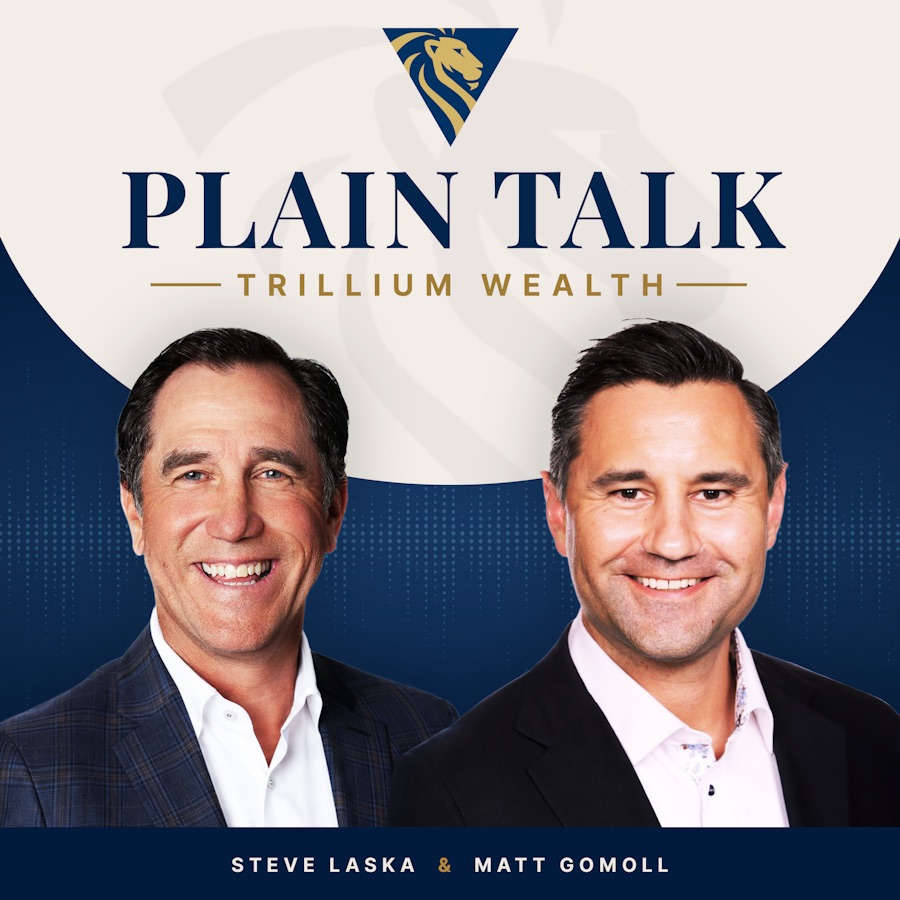
Why You Should Give Your Money Away Before You Die
August 18, 2026 · 28 min
Episode summary
In this August 2026 episode of Plain Talk, Steve Laska and Matt Gomoll make the case that families who clearly have more than enough for retirement should think about giving to children and grandchildren while they are alive, when the money can make the biggest difference. Matt describes a client in her 90s whose main worry was running out of money; when she passed, her children were in their 60s and retired, and they said the money would have helped far more in their 30s and 40s.
Matt says the first step is a comprehensive financial plan that gives people confidence they will not run out or become a burden to their children. Only then, often after a few years of retirement, does the gifting conversation start. Both hosts stress gifts that ease real pressure without creating dependence, such as help with childcare, a down payment on a starter home or, at a smaller scale, a few hundred dollars a month. Matt also mentions gifting appreciated stock for tax reasons and "gifting memories" through family trips.
The episode closes on estate planning. Matt urges listeners to get a will or trust on paper rather than wait for a perfect plan, since documents can be updated. Steve adds that beneficiary designations and wills need to line up, and suggests reviewing the estate plan with your advisor every year.
Key takeaways
- Matt said the impact of an inheritance is often smaller when heirs receive it in their 60s than when they receive help in their 30s, 40s or 50s.
- Matt said the gifting conversation should come after a financial plan shows that the giver will not run out of money or become a burden on their children.
- Both hosts said gifts should relieve financial pressure, such as childcare or a home down payment, rather than create dependence.
- Matt pointed out that gifts can be small, such as a monthly amount toward daycare, and do not have to be cash.
- Matt described paying for family vacations as a way of "gifting memories" that might not happen if everyone had to pay their own way.
- Matt encouraged listeners to put a will or trust in place now rather than wait for a perfect plan, because documents can be updated.
- Steve said beneficiary designations and wills need to work together and suggested reviewing the estate plan with an advisor every year.
Questions this episode answers
Should I give my inheritance to my kids while I'm still alive?
In this August 2026 episode, Steve Laska and Matt Gomoll said that for families who clearly have more than enough, gifts during life can make more impact than an inheritance received when children are already in their 60s. Matt stressed that the first step is a financial plan that confirms you will not run out of money or become a burden to your children.
How can parents help adult children without making them dependent?
Matt Gomoll said the goal is to relieve pressure, not to provide an ongoing handout. He gave examples such as helping with daycare costs, which he called far more expensive than when he was growing up, or helping with a down payment on a starter home to lower monthly costs. Steve Laska added that children who receive this kind of help often take pride in it and treat it carefully.
What does gifting memories mean in estate planning?
Matt Gomoll used the phrase for retired parents who pay for family trips, such as renting a beach house or taking a cruise together, that might not happen if adult children had to pay their own way. Steve Laska noted it can be done on different budgets, from 20,000 or 30,000 dollars down to about 5,000 dollars.
How often should I review my will and estate plan?
Steve Laska suggested sitting down with your advisor every year to spend at least a few minutes on your estate plan, because things like new grandchildren or a child's circumstances change. Matt Gomoll encouraged getting a will or trust on paper rather than waiting for a perfect plan, since documents can always be updated.
Plain Talk reflects the views of the speakers as of the recording date and is provided for informational purposes only. It is not a recommendation to buy or sell any security or a guarantee of future results. Market conditions change; talk with your advisor before acting on anything discussed.
Full transcriptRead the full conversation
Automatically transcribed from the episode audio; may contain minor errors. Select a timestamp to play from that point.
Welcome to Trillium's Plain Talk. I'm here as usual with my partner Matt Gomoll who is our Chief Investment Officer. And today we're going to talk about transferring wealth and some of the virtues of, you know, why wait, I guess, right Matt? Yeah, yeah, this is just, it's a topic that I find keeps coming up in client meetings. Just the idea of somebody who has saved and really well for themselves and is going to end up with more than enough. When is the right time to start transferring that down to the next generation, their grandkids? When can they make an impact? And there's different schools of thought and I've seen a lot of different things done by clients. So just wanted to kind of share some experiences we've had and some thoughts of our own that. Yeah, I, as you know, I'm a big proponent of, you know, we see a lot of clients, they're dying with millions and millions of dollars. In fact, they're holding it so long that a lot of times their heirs are in their 70s and already have their own estates and already have the money that they need.
You know, it's not about, you know, buying Maseratis and Ferraris, you know, a lot of clients, they have the life that they want to live. Yet they're keeping the money. So I've been involved in a lot of these conversations as well. I'm interested to hear what you have to have to say on this. So give us an example out there, something you're working on right now. Yeah, so, so, you know, we have various clients in different states, but I've seen this. I'll tell you. This topic became really near and dear to my heart. Several years ago, client passed away. She was in her 90s. And her biggest concern was just never running out of money, being able to live in their retirement community that they loved and had been there for 10 years. And that was the only concern. And I couldn't get her to kind of see, Hey, you could put this all in cash in a bank vault and just take it out. And I don't care what the retirement community raises your rent. You're never going to run out of money. You're 90 years old.
You know, you could live to 120 and you're still going to have money left over. But that was that mentality. It's really hard to change the psychology of folks. You know, when they're just used to that, when they grow up with scarcity, perhaps the idea of letting go can be really hard. When that client passed her family was in their 60s late, you know, mid to late 60s, all retired, inherited it. And they all to a person said, gosh, this could have been really useful when I was in my 30s and 40s and raising kids and things were tight. And now I'm good. Like, we made it. We're okay. We've got our own retirement plan. And this is just kind of icing on the cake. And they immediately started shifting it down to their kids and their grandkids to help out. And so that was really what, you know, probably five years ago spurred it for me to say, I need to talk to you. I need to talk to clients at the beginning of a relationship to make sure we set the tone and say, Hey, this, I'm going to put this on your radar that we're from the time you talked to me, even before retirement, I want to put it out there that there might come a day where we realize you have more than enough.
And now what do we do? And so that kind of gets into, you know, the process of how do we actually run through this stuff. So, excuse me. I know that you and Cherry have a lot where you go down this road. Tom does Jamie does. Like set that up for us for a little bit. Like, yeah, you have somebody coming in and they have a certain mindset. And, and, you know, I'm 59. I don't quite have the mindset of the generation that has that a lot of the clients you see in the 70s there in their 70s 80s or later. They have this fear, right? And part of that fear is it's unlikely that they really grew up in it, but they were raised by families who were actually face a depression and scarcity and stuff. Yeah. And so at a very young age, they were always told, even if they were born in the 40s or 50s, they have parents that were like, boy, this can all go away. So what does the conversation look like for a prospect or for a current client right now? Like, maybe we haven't talked to about it yet where they come in and they've got this money and they're of that age.
Like, how do you broach the subject and what's what's getting them thinking the right way? Yeah. So the main thing it starts with is we really have to do our job as financial advisors to build that comprehensive plan that allows them to have the confidence that they're not going to run out. And, and whether it is due to either just not understanding how much they really have or those old kind of burdens of their, their youth, their, their parents generation, whatever it is, they're bringing into that retirement age of feeling like, I don't know that this is enough. So first is just solving with a financial plan. Do you have enough? Are you going to run out of money? And do we make sure you're not a burden to your kids? Like, those are the simple things that while, while simple to be able to describe are very complex and how you actually come about that and convincing some of it, somebody of that is kind of hard.
We are kind of having to overcome the psychology that somebody comes in with and say, no, through the planning process, we're going to show you it's going to be okay. And maybe that doesn't mean we start gifting at age 60, but this is the track we're on. Let's revisit it at 65 at 70. Once you see, you know, you're retired for a few years, you realize that you're not drawn down on your money and then it's going to last, then we can start saying, all right, now that we know you're set up to not run out, you're set up to not be a burden on your, your kids financially. What do we do now? And then that gets set. We get to start opening up the conversation around gifting charity. And it's really about like, when can your money make the most impact that's going to be give you happiness and satisfaction and enjoyment rather than just a lump sum when you're 90 something years old. Yeah, I feel like we have a lot of people out there too. They just kind of have this, this old school feeling about how they even divide up their estate and believe it or not, like, as you know, I don't do a lot of end client stuff here, but I do know a lot of the clients and some of the call me to have this conversations.
And I had one yesterday, you know, we're really in the past two weeks I've had almost the same profile. One guy was 72 or 73 the other guy was 80 but besides that, both had about a million two, right, and another 800,000 in real estate with no debt. They don't spend any of their money. They don't intend on spending any of their money. They literally say, I'm not going to spend any of this money. I don't need it. I'm not going to spend it. Again, they still excuse me, the scarcity issue. But I started talking to them about what impact they could make. Like what, what could it mean? And Matt, do you ever talk to people about maybe starting with smaller numbers? It's kind of a fallacy, I think, on gifting number one and what it means. And I love you to talk a little bit about that about it can be much bigger than people think. It's just how you report it. But also testing the water, so to speak. So I'm 59 years old and I'm in a fortunate position. And, you know, I don't want my kids to take on debt for no reason. So if they need money to move or do something like that, I want them to borrow it from me. And most times, you know, there's a good chance I'm going to end up forgiving.
There's a mindset of people having to struggle, right? And that's part of it too, as people say. Well, I think they learn from the struggle. It's almost a little un-American, you know, like I'm ironically, I know it's a goofy thing, but on Netflix right now, Little House on the Prairie and the New Versions on. And you just watch that and you're like, those generations struggled. They didn't want their generation to struggle as much. They weren't like, boy, I hope my kids have to dig a well too. Right? I hope my kids have to live in a tent too. Right? So talk a little bit about that mindset of, can they start with a lower number? Can they start just getting into the habit of going, how can I make an impact? It's not giving something away. To me, I think we're talking about clients about how can I make an impact on my kids or grandkids? Yeah, there's a few things that I want to get into based off what you just said. One is, when is it going to create the most impact? And again, that gets back to the, well, when your kid's 65 and inherits it, great. Not as much impact as when they're 30 or 40 or 50 and life's a little harder.
Then you get into, we don't want to create dependence and that gets to the values conversation that you're kind of talking about. And then also just this idea that it can be small. It doesn't have to be cash. It can be other things. So, but we'll get into all that stuff. The, we'll start with the, the, the values, right? So any, it's totally normal for any person to have their life experiences. Think they did well and say, I want my kids to go through what I did because look at me like I made it, I'm doing well. I'm pretty successful. While also holding kind of simultaneously the, well, I want your life to be better than mine. So how do we, how do we kind of square this contradiction of I want your life to be better. I want you to have more opportunity and more success while also having the hardship that created the values and work as a part of the world. And work ethic and whatever else it is. And so that's where this kind of giving we, we don't want to set up somebody for dependence. Right. So it's not about making your kids dependent on you and getting a handout.
It's about helping them and allowing like freeing up their kind of cash flow or whatever it is to live a better life. Perfect example for this is just daycare. Daycare is ridiculously expensive. It is certainly more expensive than when I was growing up. And so the generations don't necessarily kind of understand what the other person's going through, right? Like a parent who's 60, 78 years old doesn't necessarily know because it's just drastically different the cost of raising a kid today. And so that's a great area that could be small, right? It could be, oh, it could be $500 a month. It could be a one time gift of a few thousand dollars. Anything goes a long way to help alleviate that just outrageous burden that is childcare, you know, pre going to school, or even if you send a kid to private school for whatever reason, like they're, it's just all really expensive. I've got a one year old grandson, Matt. It's one and a half. It's $3,000 a month for daycare and Jamaica Plain. It's $3,000 a month. Like if they had another kid, my daughter-in-law should quit her Harvard fellowship.
That's how big of a burden it is financially. Yeah. And that's, you know, I don't think anybody's discouraging hard work by helping with daycare. Right? Like it's, you're encouraging somebody to keep pursuing their career. And do all those things and give their kids a good environment, you know, the grandkids, a good environment to be cared for in. But that's a huge financial burden. Same with home ownership. It is. It is just materially different buying a home for a 20 or 30 year old today than it was 30, 40, 50 years ago. And so that's another area. Now we're talking about a much larger gift. And we've certainly helped clients assist with that down payment, right? And you can give, you know, you can give the large amount and assist with the down payment. But again, it's not like, it's not like you're necessarily hoping a child buy an outrageous home. It's just a starter home. I mean, you might put $100,000 down payment on a starter home with somebody.
And that's a huge gift. It creates just freeze up so much less mortgage, no PMI, perhaps. Like it just freeze them up to get on a better track of home ownership, less monthly costs, all those things. And you're, you're certainly not creating dependence by doing that. You're just saying, Hey, I'm going to give you a little more breathing room in your budget monthly. So those are the kind of things that we don't want to set somebody up to just, you know, receive $5,000, $10,000 a month and never have to work. It's about just creating, you know, doing these things that set them up on a different path to be successful. Because, I mean, frankly, the games changed since, you know, 40 years ago. Yeah, I mean, like, I hate to get granular on you, but I think about all these things like your PMI is $350 a month for a house. Like if you could just help your kid out with that, right? And like you said, if you can, if, you know, I look at it like, if you could be a backstop or a bridge that helped them for the first three years of the mortgage while they were, you know, working hard, making more money and getting to that point, because I think, like using the housing example, every delay of somebody buying a house in their youth, it's getting further away and further away and further away.
I mean, I owned my first house at, like, I don't know, I was in the army, 23 or 24 years old. You know, and it was, it was easy. It was like, it was, it was cheaper than rent, to be honest with you. Like I bought a house and people are like, why do you have this house? I'm like, it's cheaper than rent for me. And that was, by the way, that was added 8.5% mortgage. It was still cheaper than rent back then. It's the, the pure cost of housing now, not, not the carry costs, but the pure dollar amount that you have to borrow is at another level right now, compared to wages. Right. And it, you know, we all know that getting into home ownership helps to set you up for building wealth. And it's just the barrier to entry can be really high. And a young family may put it off for five or 10 years. Whereas, you know, that, that retired age parent coming in and saying, Hey, I'm going to help you. We're going to make this work can give them a head start.
And then that goes to the other point about when is it going to make an impact again. Dropping a million bucks on somebody when they're 65. Great. They're going to have a wonderful retirement. And at that point, I look at it as. The, the, the, you know, the client. Who lived through the retirement age, probably continued to be frugal. Didn't, you know, again, they have these money habits that they're, they're not spending that much. And so they held on to it. Die with a million dollars goes to a kid who's 65. Now they're just going to have a lavish retirement. Right. And unless they do the same thing of passing it down. Right. So it's like somewhere in here. We got to break the cycle and say, when is the right time to create impact for my family down one or two generations. And also I think it's a great thing because if a parent does that, their kid will see that, you know, oh my gosh, my parent helped me when I was in my 30s or my 40s.
I'm going to have a mindset to pass that on and do the same and not be the person to, you know, go to my 90s with a huge lump sum and my kids get it when they're 65, 70. I think there's a bit of a psychological effect too. Like if I were to coach people on it, because again, I'm at an age where my kids are having kids. And I think what people forget. So first of all, we're building curriculum right now at Trillium. Like Cherry's actively building curriculum. She's done taught kids of parents already and there's been a good feedback. Like when they're really little, when they're like preteen, when they're teenagers, even when they're in their 20s. And I think if people want to have a little bit of their values in there, I don't know. Like, you know, I give an example on my own children. They love me. They respect me. If I did, if I were to give them some money now, they'll probably be more careful than if I wasn't here to be honest with you. Like if you want to start building their habits, there's something to be said for, boy, you help them buy a house or you help them do something that again alleviates pressure. It doesn't take away. There's good pressure and bad pressure. It doesn't take away good pressure. But that they sit there and think like, man, when my parents come over this house, like, I'm gonna have it looking good.
Like they actually gave me money to do this, right? Like when my parents help me put my kids in a private school, they're gonna get good grades. Like we are absolutely gonna hold them to account. So I think if you want to teach your kids good habits, even in their 20s, 30s, 40s, I just have to believe there's some human behavior on how you act, no matter how much you love and respect your elders on how you act. If they get to see you benefit from their money versus, you know, hey, they're gone. Joy's, I really respect them. But I mean, there was a guy at our house the other day, like the working guy and he inherited money. And he's like, I bought a Maserati. Like seriously. So I don't think people do that if you teach them by gifting, you know, at a certain time. Have you seen that at all out there? Yeah. I have. It's interesting like that that a lot on the home ownership thing, right? Like you said, I'm a dad, help me with a down payment. And now I'm gonna like, take care of it, have pride in it.
Appreciate it. No, I didn't get there on my own and be really grateful. Right. So it's just creates a different family dynamic. So it's, it's, that's pretty cool. The, the other thing I wanted to kind of touch on is, yes, you can gift cash. It can be for specific things. It can be for a down payment can be for childcare. It can be just general support. It can be any of that stuff. Now I'll get into like a little bit of other stuff. Right. We might recommend for tax reasons, gifting appreciated stock. That's a thing. Right. We, we, we transfer the tax burden from the retiree to the, the child, you know, in their 30s who's in a lower tax bracket, who it has less tax burden on. Maybe we're changing from 20% capital gains on the, the parent to 15% on the child, whatever it is. That's a possible thing to do. The other thing I'll mention and I know you were involved in this years and years and years ago was the idea of gifting memories and just, it's, it's part of the, the parent retiree parents spending can be just gifting vacations and time together.
And creating that environment where we have a client who will go rent a beach house, or maybe some, some years they've taken a cruise together and bringing together, you know, at that point, you have, even if you just have two adult children. And then you have four teenage grandchildren. That's a lot of people to get together, a lot of different schedules and left up to your own devices. It might not happen. Right. So the, the, the retiree parents stepping in and saying, no, no, we've got this. We're going to pay for us all to get together to make memory of the family. And this is part of what we want to leave for our family can be really impactful. And again, it's, it's, it's doing something that creates value for the whole family that otherwise would not get done. Right. If everybody had to pay their own way. Again, those, those parents who are in their, their 30s, 40s, 50s, raising their own kids, they can't necessarily fund that vacation. And so it's just never going to happen.
So that the retiree parents stepping up and saying, yeah, we've got this because it's important to us is really cool. So I've loved seeing that play out with some of our clients. It's my favorite thing that I've seen, you know, like a lot, I've seen people make big impacts and I, and they're a bigger impact. Don't get me wrong. But there's that vacation idea. We've seen it a few times where people put it off, put it off. They finally did it. And when they did it, they started to make it a habit. Right. And it started to become something that, like you said, like gifting memories and. Man, those things go a lot further than that. Like you're spending time together as a family and you're gifting memories, you're gifting knowledge and wisdom and all of those. And it's very impactful. Like, you know, people's, people's brains are worth, you know, more than anything, like what their knowledge and wisdom is. So there's so many people, Matt, that can easily do that one. And I want to remind people out there that there are levels to this. Right. Like we've seen people spend 20 or $30,000 on a vacation, but trust me, you can spend $5,000 on a vacation and alleviate all that from the kids.
If you're living the same area, you can all drive to that beach house, your renting or whatever you're doing. Right. And there's ways to budget it. And I think there's ways that we would always like to help people realize that because that's really, and I've, I've thought about this. And I talked to our marketing guys the other day. I wanted to create a series called, you know, what's your return on investment? Because I think if we had the conversation with our clients. And, you know, I don't think they would think about the return on investment, except for when we tell them, right? Here's your review. You made X percent. Like, what's the real return on investment though? The return on investment for a life's work is I did these vacations for my family. I told the guy the other day, I'm like, whose 80 is kids are in their 60s. I'm like, you have $1.2 million in just investable assets. I go, you know what? Like $30,000 to your grandkids would mean if you died 10 years from now, you wanted to give him a long time. Right. He's like, well, I never thought about that. I'm like, so when you think about even afterwards passing to your family, this is just kind of block. I have two kids. I split it. Like, there's a lot of thought that can be put into how you do things while you're alive, and then how that matriculates after you pass.
And I'm very excited to help people do those things. I, you know, I say it all the time, Matt, like you've seen me. I've looked at prospects and clients and said, we have too many people that are dying with like two or $3 million. And it's counter to what we should say, right? Like, we're a fiduciary. We get paid on a fee basis. The more money you use, the less we get paid. Trust me, the happier I am though, because it means we're doing our job. Like, I sometimes question us, like, are we doing enough to encourage clients? Don't die with $3 million. Right. Don't just don't don't do it. Right. Don't don't do it. Enjoy it and watch your family enjoy it. And like I said, teach some things about money. Anything else on this topic? Yeah, you kind of mentioned the, the estate plan aspect of it. Right. There's the, there's the part that you do while you're here. We want you to participate in that. Enjoy seeing the, you know, the memories that it can create the stress you can relieve. All those things are wonderful.
And then there's the state plan part, right? And that is something that I would encourage anybody to just put something in place. Right. And this is where we often see people get stuck because they're trying to create the perfect plan and think through all the scenarios. And then they don't put anything on paper for a year. Get some on paper. It can always be updated. You can always update wills and trusts. And then, yeah, like it's, we've seen recently a client pass and, and you're mark a chunk of money for each of their six grandkids. And now all those six grandkids, you know, they get $50,000 each in their 20s, you know, and some of them were actually high school age at the time. And that's just a huge chunk to start off with. It's great. Right. And it doesn't have to be all one thing. So brainstorming, using creativity, you know, trust, allow you to control things more and say, this is actually what I want to use for if you feel like that. You don't need to. But either version, whether it's a will or a trust is just necessary to have your wishes expressed. And we want to make sure that.
Get something on paper so that the government's not deciding what your, you know, where your assets go and how to divide them. Yeah, I'm going to be more emphatic than that. One of the conversations I had yesterday was with a parent of one of our teammates. And it's something that I told him, you know, he has, you know, he didn't want to leave his advisor that he's already been with for 40 years and that was great. And I was just, I was giving him some kind of personal advice. But I'm like, he's like my advisor, I gave him instructions on what to do. I'm like, that doesn't work. As a matter of fact, and I think I'm right about this, I'm like, if you have your IRA beneficiaries written a certain way and your will contradicts that, your will gets overridden by that document on the IRA beneficiaries. Right. It's like, these things have to be in tandem. So I say I'm going to be more emphatic is you should sit down with your advisor every year and spend a few minutes. On your estate plan, sometimes you should spend more, but usually the least spend a few minutes looking at your will and going, well, this changed because I've seen many times where I forgot I had multiple grandchildren.
I never made that change. And I want to do something like that. Or I forgot, like one of my kids, you know, is going through a difficult time. And maybe I want that trust to be a little tighter right now. Right. If something were to happen to me tomorrow, but five years from now, that can change. So we have great stuff to do for people on this. Like we can do wills and trusts. We have the ability to do some of these things on a very simple level. We can put them with the state plan attorneys on a bigger level. But, you know, I like to see people and I let's put it this way, Matt. I think that you and I are agreement on this. Like, it's an estate plan, not a state document and a state plan. And that's all people have think about this in a state plan. Part of that starts while you're alive. And what you might do during that. And then after your death, but it's a plan. It should be more than just a document. Yep, absolutely. Well, thanks, Matt. As usual, I appreciate it. And would say to everybody, you know, click and subscribe. We want a bunch of different platforms now. You know, we're out there. I believe we're on Apple, we're on Spotify. We're still on YouTube. There's a lot of different places for you to listen to us. We would love feedback and love topics.
And over the next few months, you're going to see us start to have some guests on here to talk about some important things as well. So with that, thanks, Matt. And we'll see you next time.
Keep listening.
How to Balance Saving for Retirement and Living for Today
September 1, 2026 · 18 min
Episode notes →PlanningGive with Greater Impact: Tax Smart Strategies for Family and Charities
August 25, 2026 · 18 min
Episode notes →PlanningWhen It Makes Sense to Hire a Financial Advisor
July 29, 2026 · 27 min
Episode notes →Start with a conversation.
Tell us what is on your mind. We will match you with an advisor near you, or meet by video.